By Mohammed Yaaseen Ebrahim, Founder and Managing Director, Innovation by Design
Let me start with a map.
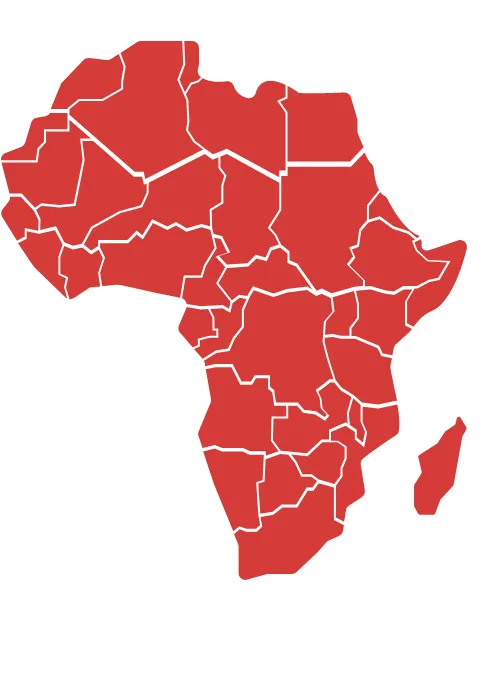
Not the one Togo just asked the United Nations to retire. Though that one matters and I will get to it. I want to start with the map inside your head. The one you built from decades of news cycles, school textbooks, and aid campaigns that taught you to see this continent as a problem to be solved rather than a power to be reckoned with.
That map is the real problem.
And as Africa’s imaginary CMO, fixing it is the brief.
The Map That Lied
In 1569, Gerardus Mercator created a projection of the world designed for navigation. It distorted size to preserve angles. As a side effect, it made Greenland appear roughly the same size as Africa.
Greenland has 56,000 people. Africa has 1.4 billion.
Africa is in reality 14 times larger than Greenland. It is larger than the United States, China, India, and most of Europe combined. And for five centuries, every classroom on earth has shown children a map that makes it look small.
Togo’s foreign minister formally asked the United Nations to change this. Not as a symbolic gesture. As a structural correction to a lie that has been embedded in global consciousness since the age of sail.
Most people scrolled past that story in thirty seconds.
I want to stay with it. Because a continent being misrepresented on a map for 500 years is not a cartography problem. It is a branding problem. And it has had consequences that go far beyond geography.
You cannot underestimate a people you have been taught to see as smaller than they are. And you cannot expect those people to fully believe in their own scale when the world has been showing them a lie since birth.
The Mercator projection did not just distort geography. It distorted perception. It shaped how investors saw Africa. How journalists wrote about it. How Africans were taught to see themselves relative to the rest of the world.
What the Numbers Actually Say
Here is what Africa looks like when you replace the Mercator projection with data.
Eleven of the world’s fifteen fastest-growing economies are on this continent right now. African startups raised $705 million in the first quarter of 2026 alone. A 26.5% increase on the same period last year. The African creative economy is generating $58.4 billion in exports annually. Universal Music Group bought a majority stake in Nigerian label Mavin Global. Afrobeats artists are filling arenas on every continent. Kendrick Lamar’s Super Bowl halftime show was punctuated by African rhythms that the world has finally stopped treating as exotic.
Kenya built M-Pesa. The mobile money system that the developed world is still trying to replicate fifteen years later. Rwanda became a global testbed for emerging technologies. Egypt and Morocco are building renewable energy value chains. Nigeria has a tech ecosystem producing founders at a rate that would have seemed impossible a decade ago.
A South African man from Potchefstroom named Nathan Kirsh just sold a business to Sysco for R500 billion. He is 94 years old and he is now Africa’s second richest person. A Cape Town fintech founded three years ago called BVNK sold to Mastercard for R30 billion. A South African woman built a Kalahari salt brand called Oryx that is now on restaurant tables in twenty countries. Samantha Skyring started in her kitchen. She is in twenty countries.
These are not exceptions. They are signals that the rest of the world has not yet learned to read correctly.
The Brand Gap
Here is where I earn my imaginary salary.
Africa’s brand gap is the distance between what is actually happening here and what the world believes is happening here.
That gap costs this continent billions of dollars every year. In underpriced exports. In investors who fly over Africa to get to markets they perceive as more stable. In African professionals who apologise for their passport before they speak. In founders who undercharge because they have been taught to see their geography as a liability.
The Mercator map did not just distort geography. It distorted psychology. And psychology shapes markets. It shapes investment decisions. It shapes what young people believe is possible for themselves.
Here is the brand reality.
Africa has the youngest population on earth. By 2063 it will be home to 25% of the world’s population. It holds 60% of the world’s uncultivated arable land. It contains the critical minerals that every electric vehicle, every smartphone, and every AI data centre on the planet depends on. According to McKinsey, generative AI alone could unlock $100 billion in value for African economies. AI could double Africa’s GDP growth rate.
The continent is not lacking resources. It is not lacking talent. It is not lacking ambition.
It is lacking a story that matches its actual size.
The Single Currency Question
Let me address the question that comes up every time someone talks about Africa as a brand.
Africa has more than forty currencies. When a South African business wants to trade with a Nigerian business, the money often has to leave the continent, convert to dollars, and come back. That process costs an estimated $5 billion a year in unnecessary transaction costs alone. Every year. Just in friction.
The African Union has been talking about monetary union since the Abuja Treaty in 1991. The conversation has produced names for proposed currencies. The Afro. The Afriq. West Africa’s Eco. The timelines keep shifting. The political will keeps fragmenting. The optimistic timeline for any meaningful continental monetary convergence is now well beyond 2030.
But here is the marketing observation that the economics conversation keeps missing.
The euro was not just a currency. It was a brand statement. It said we are one market. We are one voice. We are a force that commands attention at the table where global decisions are made. Before the euro, European businesses faced the same transaction cost problems African businesses face today. The creation of monetary union did not just reduce friction. It changed how the world perceived European economic power.
Africa does not need to wait for a single currency to make that statement.
It needs to start making it now. In every boardroom. In every classroom. On every map.
The conversation about monetary union is an economic conversation. The conversation I am proposing is a brand conversation. They are related but they are not the same. You can build a brand on a continent with forty currencies. You cannot build a brand on a continent that does not believe in its own scale.
The Brief
If I were writing the actual CMO brief for Africa in 2026 it would say this.
The strategy is not to convince the world that Africa is rising. The world already knows. The data is public. The investments are flowing. The talent is visible. The strategy is to close the gap between what Africa believes about itself and what the evidence actually supports.
That means the classroom in Kigali where a child looks at a map that shows their continent at its actual size for the first time. That means the founder in Lagos who pitches at the same price as her counterpart in London because she knows her work is worth it. That means the investor in Shanghai who stops calling Africa a risk and starts calling it what it is: the highest return opportunity on earth.
The campaign is not a logo. It is not a tagline. It is not a tourism video with sunset footage and drum music.
It is a collective decision to stop accepting the Mercator projection as the default.
In geography. In investment. In self-perception. In ambition.
The most powerful brands in the world are not built in advertising agencies. They are built by the accumulated weight of a million decisions by a million people who choose to see the same thing in the same way at the same time.
Africa’s brand will change when Africans decide it has changed. When they stop apologising for their passport. When they stop underpricing their labour. When they stop describing their continent as emerging when it has been here, and growing, and producing extraordinary things, for longer than most of the civilisations that invented the word emerging.
Tagline
After everything, the brief reduces to one line.
We were never small. You just had the wrong map.
That is not a marketing claim. It is a geographical fact.
Greenland is 56,000 people. Africa is 1.4 billion.
The map was wrong. The continent was always this size.
It is time the story matched the territory.
Mohammed Yaaseen Ebrahim is the Founder and Managing Director of Innovation by Design, a full-service digital strategy, design and development agency based in Johannesburg. He has worked with brands across South Africa and internationally for over a decade, and serves as a Fractional CMO for clients across multiple industries.